Venetian & Decorative Plaster
Lime finishes that behave like stone, because chemically they are becoming stone.
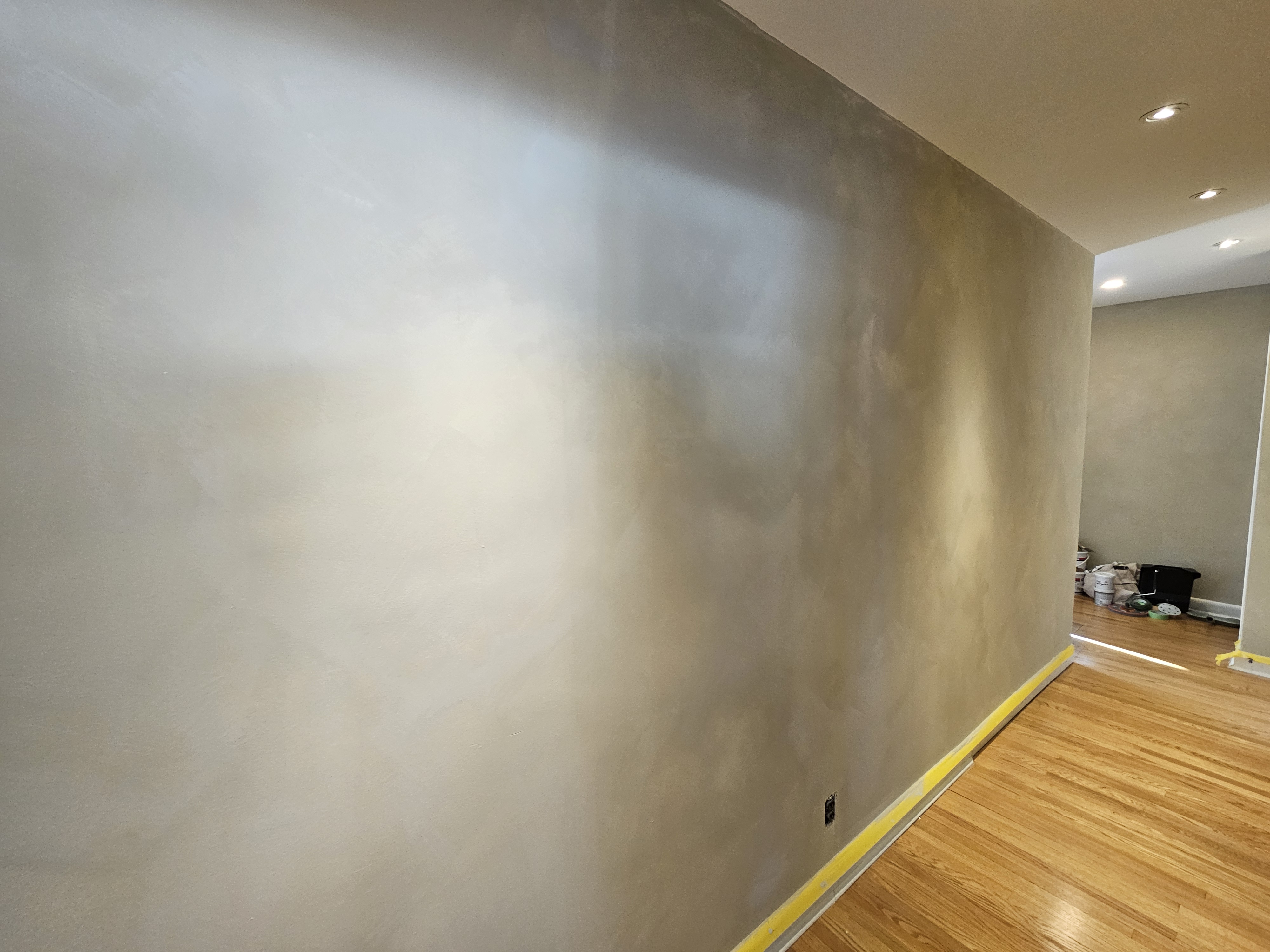
Polished lime plaster is applied in a series of thin, burnished coats. The result is a surface with genuine depth. Light moves across it the way it moves across marble, because the material is doing the same thing marble does.
Lime plaster cures by absorbing carbon dioxide out of the air and reverting, slowly, to calcium carbonate. A wall finished this way is not coated. It hardens into a thin skin of stone that gets tougher for decades after we leave the site.
What we work in
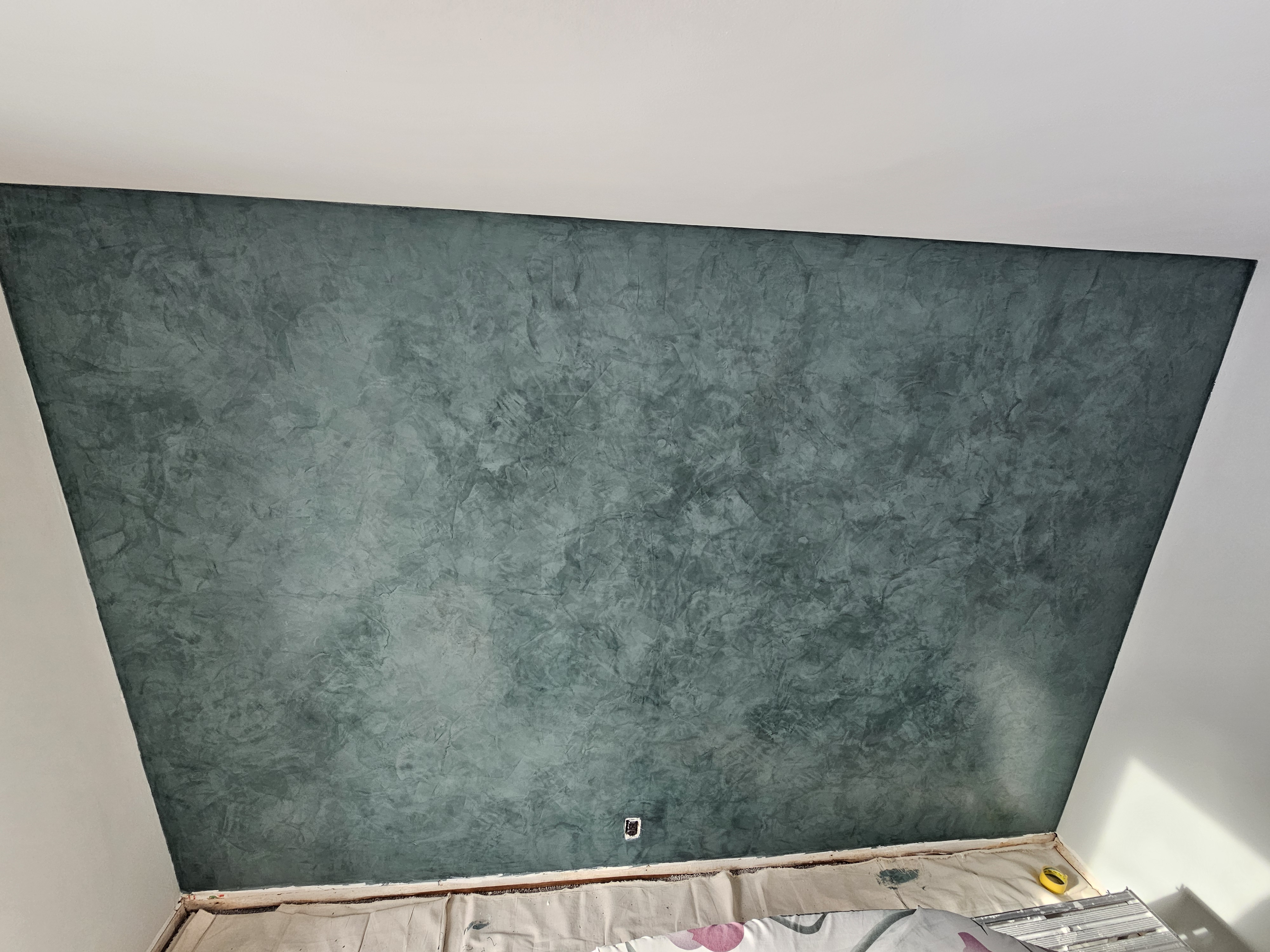
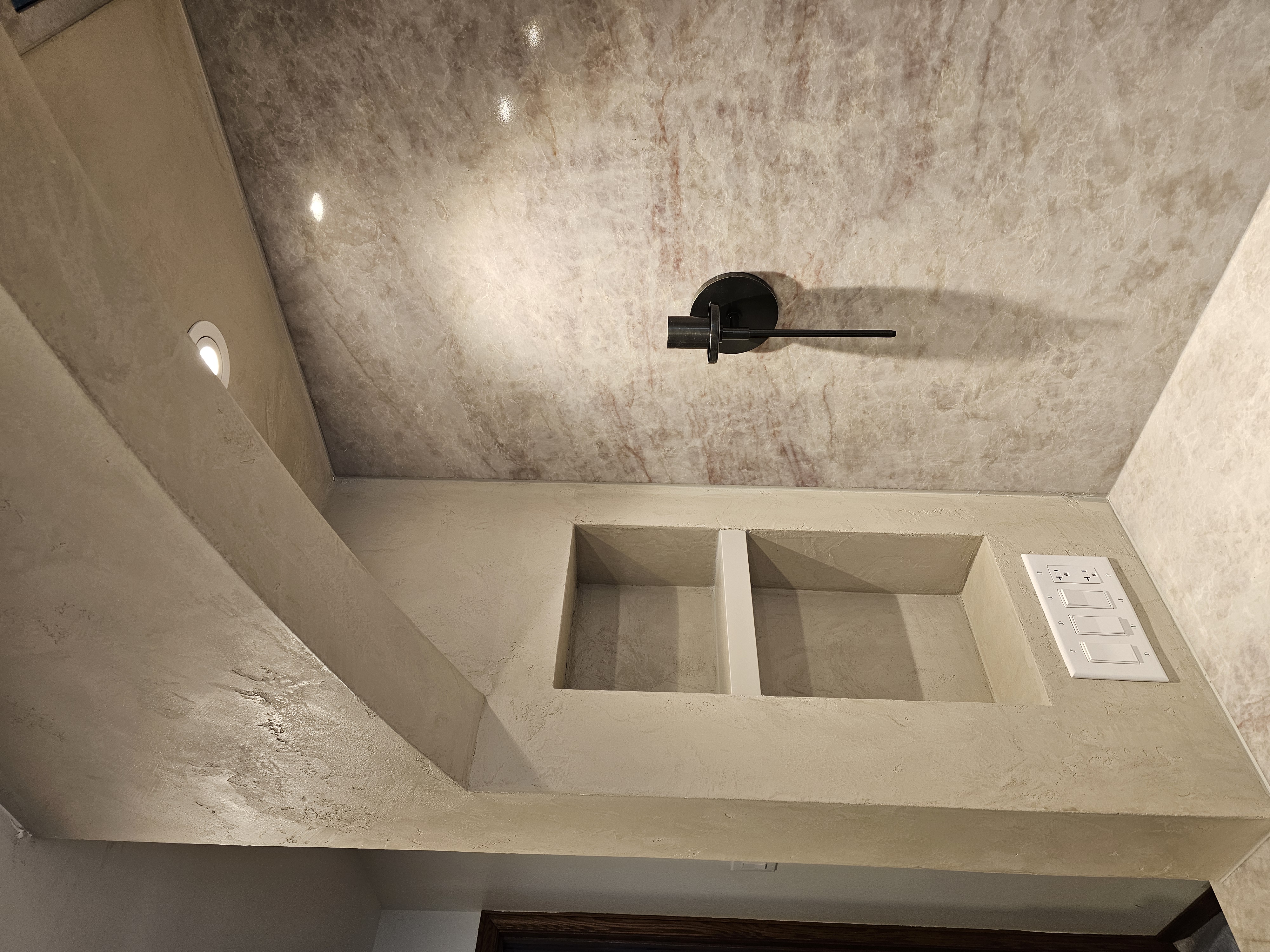
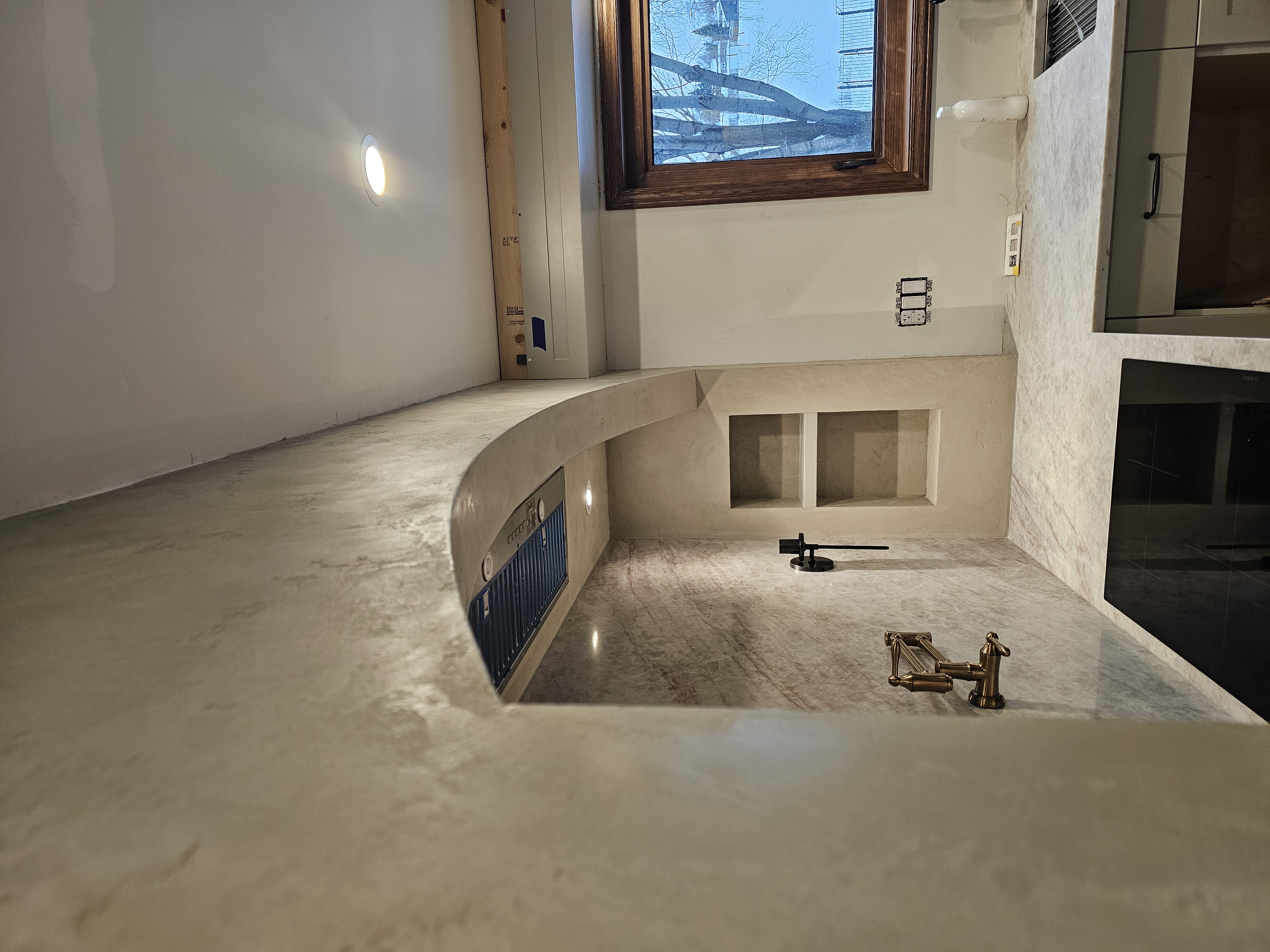
Grassello for the high-polish, marble-like finish most people mean when they say Venetian plaster. Marmorino for a tighter, more matte surface with visible aggregate. Tadelakt where the wall needs to be waterproof, which makes it the one lime finish suitable for a shower enclosure. Beyond those, custom textures developed on sample boards to match a designer specification.
Colour is mixed into the plaster rather than painted onto it. That matters more than it sounds: a scuff on a painted wall exposes a different colour underneath, whereas a scuff on tinted plaster exposes the same colour it always was.
How the work runs
The substrate does most of the work. We take the wall to a Level 5 finish first, because a polished plaster surface will find and amplify every flaw underneath it. Then a tinted base coat, then two to four skim coats applied and knocked back with a steel trowel, then the burnish. A wax or soap seal closes the surface.
Expect four to six days on a single feature wall including cure time between coats. We work off sample boards approved on site under the room actual lighting, never off a photograph.
Tell us what the wall is doing
Send a photo and a rough scope and we will come back with an honest assessment and a free quote.
Get a Free Quote